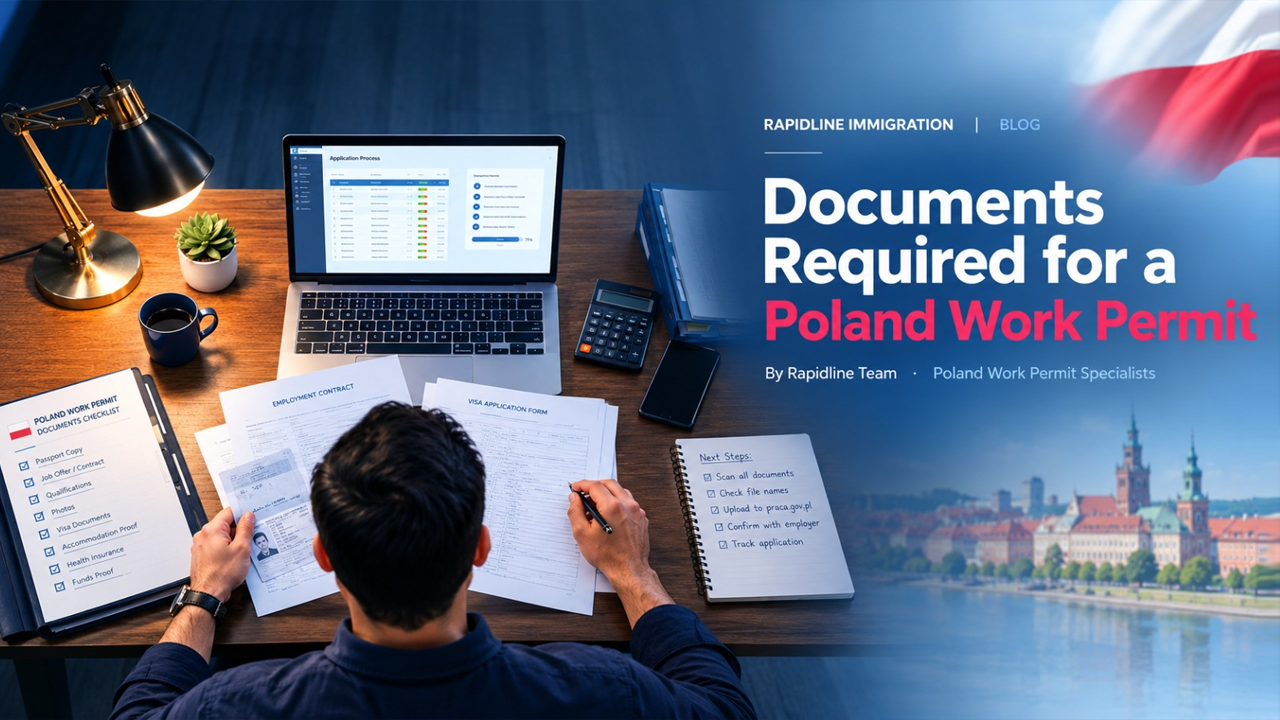

Since 1 June 2025, Polish work permit applications and their attachments must be submitted electronically only, through the praca.gov.pl portal. That single change reshaped this checklist: your scans are no longer copies of your documents, they are the application itself.
Here is what is needed, at both stages, and the scanning standards that decide whether it clears first time.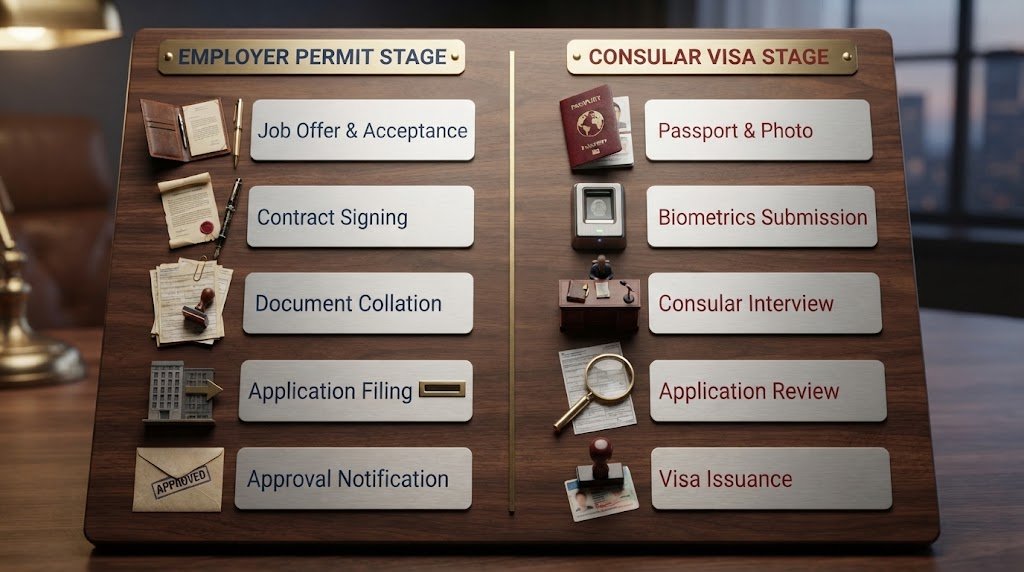
Why Does Electronic Filing Change the Checklist?
Because nobody is in the room to resolve an ambiguity for you. A caseworker assesses your file on screen. There is no counter conversation, no chance for your employer to explain a discrepancy in person, no glance at the original.
Under the old paper process, a small inconsistency might be queried and corrected quickly. Now it becomes a formal request for correction, and the processing clock, which only starts on a complete application, does not start until you have answered it.
Practically, this means document quality now carries the same weight as document presence. Having the right paper is not enough if the scan is unreadable.
Stage 1: What Does Your Employer Need From You?
Your employer files the permit application at the relevant voivodeship office and pays the PLN 400 government fee for a job longer than three months. You typically supply:
• A valid passport copy, with enough remaining validity to cover the intended stay, showing the biometric page fully and without cropped edges
• A signed job offer or draft employment contract stating your position, exact monthly salary and contract duration, with the salary at or above Poland’s PLN 4,806 monthly minimum for 2026
• Proof of qualifications or relevant experience where the role requires it, such as trade certificates or a work reference
• Passport-style photographs meeting standard Schengen photo requirements
The employer separately handles their own side: company registration documents, the labour market test where it applies, and the electronic submission itself. That part is legally theirs, not yours.
Stage 2: What Does the Visa Application Need?
Once the permit is issued, you apply for a national type D visa at the Polish consulate covering the UAE. Requirements typically include:
• Your original passport, plus the issued work permit
• A completed national visa application form
• A recent passport photograph to Schengen standards
• Proof of accommodation for your arrival period in Poland
• Proof of sufficient funds to support yourself on arrival
• Valid travel health insurance covering your stay
• Payment of the consular visa fee, which is set separately from the permit fee
Consular requirements vary by post and change on their own schedule, so confirm the current list directly with the consulate or through a licensed consultancy before your appointment rather than relying on any blog, including this one.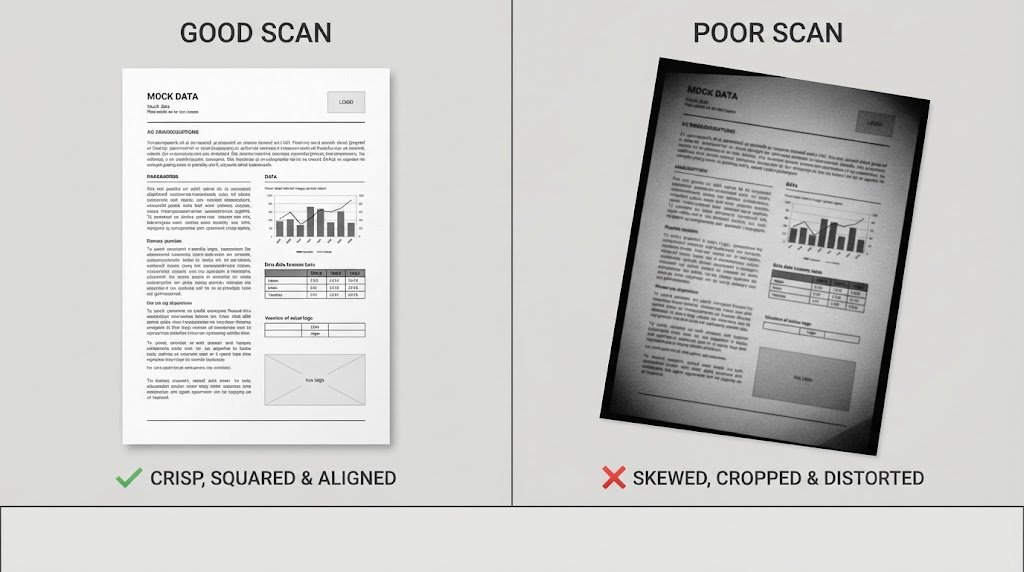
What Are the Scanning Standards That Actually Matter?
These are the details that decide whether a complete file reads as complete:
• Scan the full page, edge to edge, not a photograph taken at an angle
• Use 300 dpi or better, so small print and stamps stay legible when zoomed
• Keep colour scans for anything with a stamp, seal or signature
• Name files descriptively, so a reviewer can see what each one is without opening all of them
• Check every file opens and renders before submission, since a corrupted upload counts as a missing document
None of this is difficult. All of it is skipped often enough to be a leading cause of delay.
What Has to Match Across Documents?
Consistency is checked, and mismatches are treated as unresolved questions rather than typos.
Your name must appear identically across passport, contract and application, including middle names and spelling. Dates of birth must match exactly. Your job title on the contract should match the role described in the application. The salary figure must be stated once, clearly, and not contradicted elsewhere in the file.
Where your passport spelling differs from how your name appears on a certificate, flag it in advance with supporting evidence rather than hoping it passes unnoticed. The most common refusal triggers are collected in what actually gets a Poland work permit rejected.
When Should You Start Collecting Documents?
Earlier than most people do, because several documents have validity windows that can expire underneath a slow application.
Your passport needs enough remaining validity to cover the intended stay, and renewing it mid-process means every document referencing the old number needs revisiting. Photographs must be recent. Bank statements need to be current at the point of assessment rather than months old. Medical or police documents, where a particular employer or consulate requires them, often carry explicit validity periods.
With processing deadlines suspended until 4 March 2026, a file can sit longer than it once would, which raises the risk that a document valid at submission is stale by the time it is reviewed.
The practical rule: sort long-lead items first, passport validity above all, and leave short-validity items such as bank statements until the file is otherwise ready to submit.
What Should You Keep After Submission?
Everything, in a form you can resend within a day.
Keep your own copies of every file submitted, named the same way they were submitted. Keep a record of what was sent and when. Keep the application reference your employer or consultancy receives on filing.
There are two reasons this matters. First, if the office requests a correction, the ability to respond within days rather than weeks directly protects your timeline. Second, if you later need to appeal a refusal, the 14-day window is short and having the original file at hand is the difference between a considered response and a rushed one. That process is set out in what actually gets a Poland work permit rejected.
If you are working through a consultancy, ask for a copy of the final submitted set for your own records. A firm acting properly provides it without being pressed.
Why Does Completeness Matter More Than Speed?
Two reasons, and both are financial.
First, the processing clock starts only on a complete application, and the statutory 60-day deadline is in any case suspended for most decisions until 4 March 2026. Rushing an incomplete file forward gains nothing, as explained in how long a Poland work permit really takes.
Second, the PLN 400 fee is non-refundable if the permit is not issued. An avoidable refusal costs the fee, the service charges, and the months. Building the file once and building it properly is the cheaper path, covered in the real cost of a Poland work permit.
What Should You Do First?
Check the salary on your offer against PLN 4,806 before assembling anything else, because there is no point building a complete file around an offer that cannot clear the legal minimum.
Then gather documents in one pass, scan them to the standards above, and have someone other than you review the set. You know what your documents are supposed to say, which makes it unusually easy to read past your own errors.
If you want your document set reviewed before your employer submits it, send it to the Rapidline team on WhatsApp and we will tell you what is missing or unclear.


Rapidline Immigraion